|
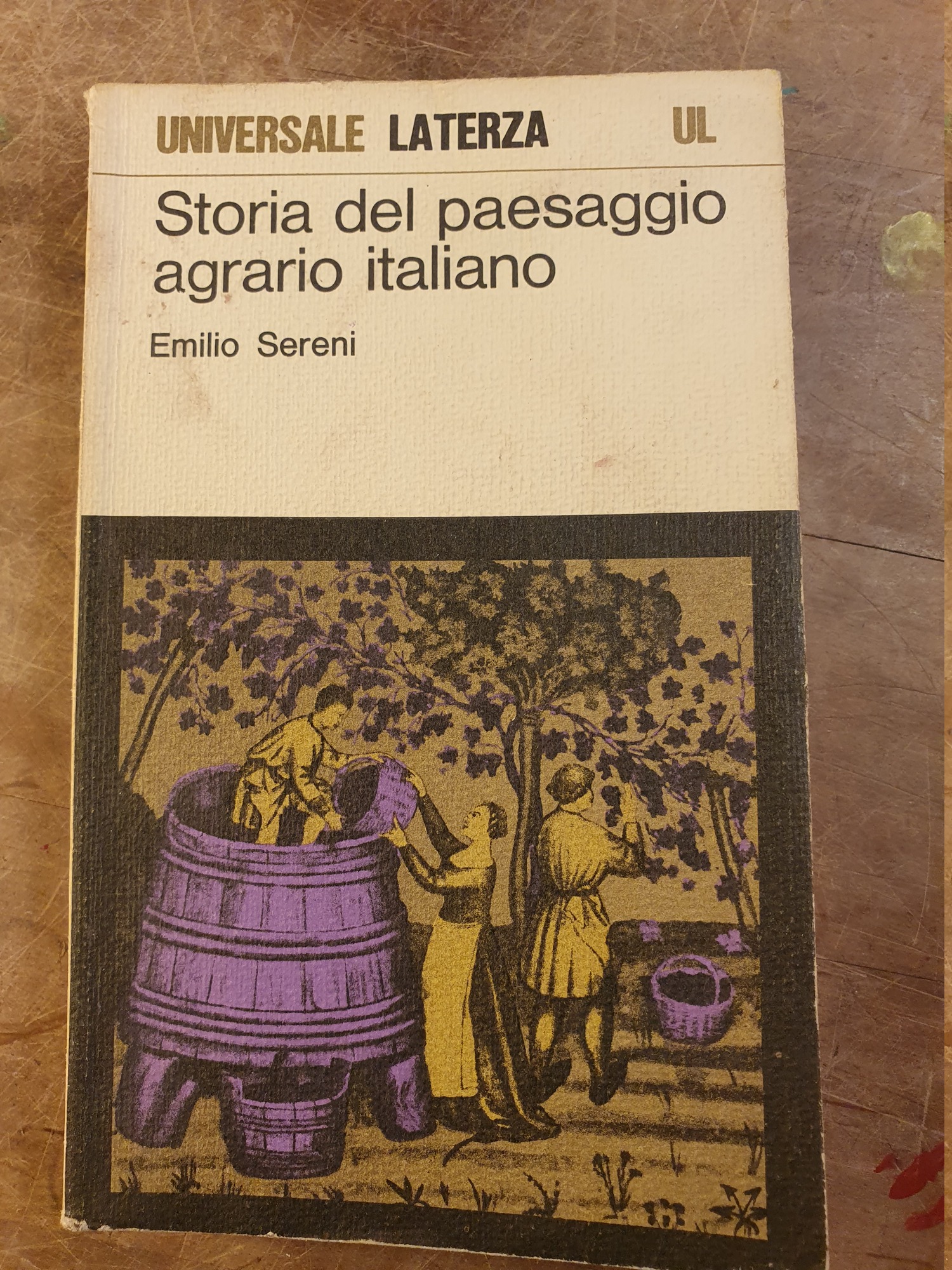
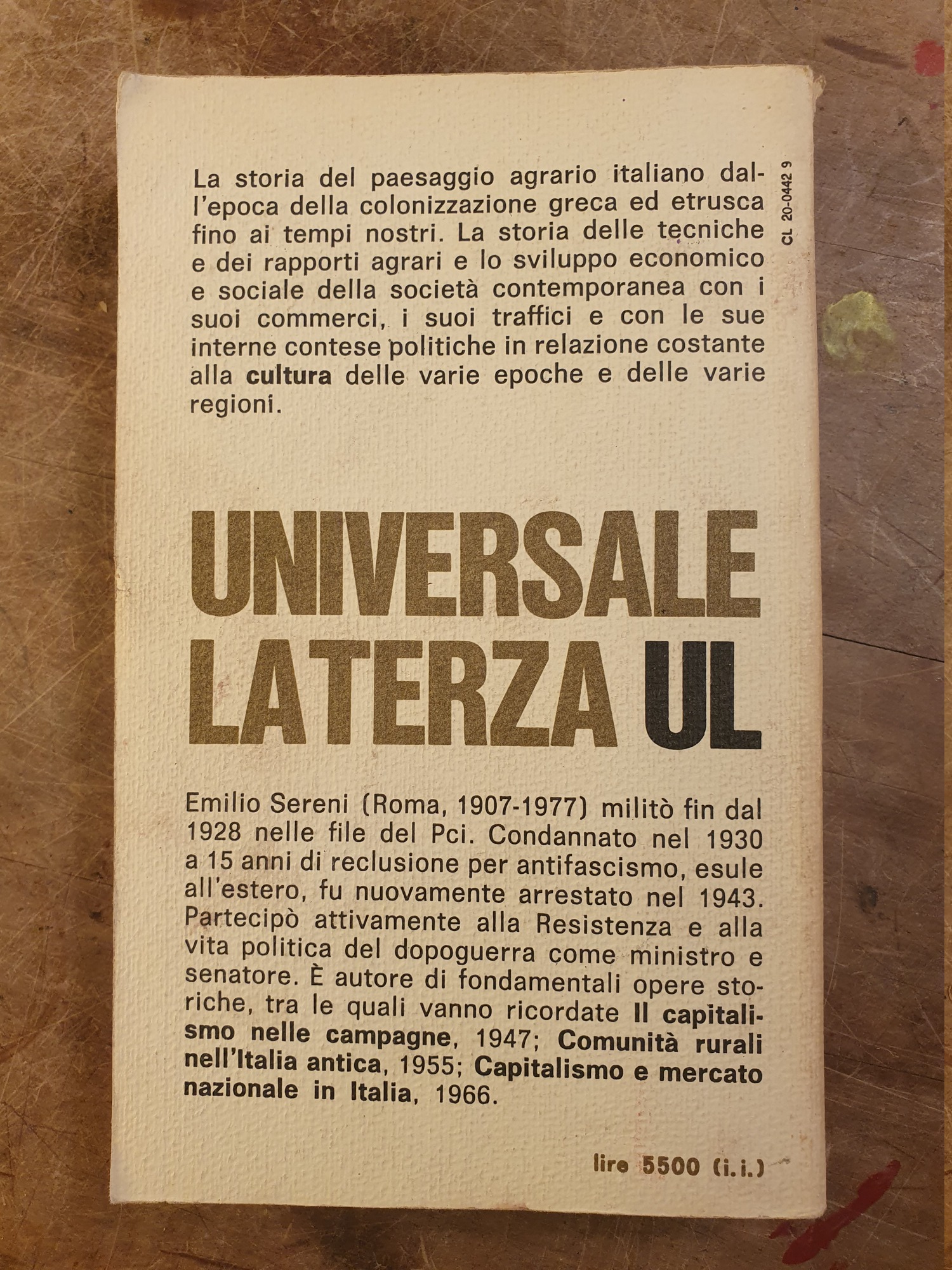
Storia del paessagio agrario italiano Autor: Emilio Sereni Verlag: Laterza Italienisch 5.00 CHF ISBN: 978-8842037083 |
|
|
In den Warenkorb Merken
|
|
       |
|
|
Emilio Sereni's *Storia del paesaggio agrario italiano* (Laterza) is a seminal work in the history of Italian agriculture and landscape. It's not just a historical account of farming practices, but a deep dive into the intricate relationship between the Italian landscape, its people, and its economic and social structures. Sereni meticulously traces the evolution of Italian agricultural landscapes from antiquity to the mid-20th century, analyzing the impact of various factors such as climate, soil conditions, technological advancements, social structures (e.g., feudalism, sharecropping), and political changes. The book is notable for its: * **Interdisciplinary approach:** Sereni masterfully weaves together geographical, historical, anthropological, and economic perspectives to paint a comprehensive picture. He doesn't simply describe what was grown where; he explores *why* and the broader societal consequences. * **Regional specificity:** The book moves beyond a generalized narrative, offering detailed analyses of different regional agricultural systems, highlighting their unique characteristics and variations across the Italian peninsula. This attention to detail makes the work immensely rich. * **Emphasis on human agency:** Sereni avoids deterministic explanations, emphasizing the role of human choices and adaptations in shaping the agricultural landscape. He explores the cultural significance of agriculture and the way it shaped Italian identity. * **Visual richness (in later editions):** While the core text is rich in description, later editions often include maps, illustrations, and photographs that significantly enhance understanding and add to the visual appeal. In short, *Storia del paesaggio agrario italiano* is a fundamental text for anyone interested in Italian history, geography, agriculture, or the study of landscape as a historical artifact. It remains highly influential and continues to be cited extensively in academic literature. |
|